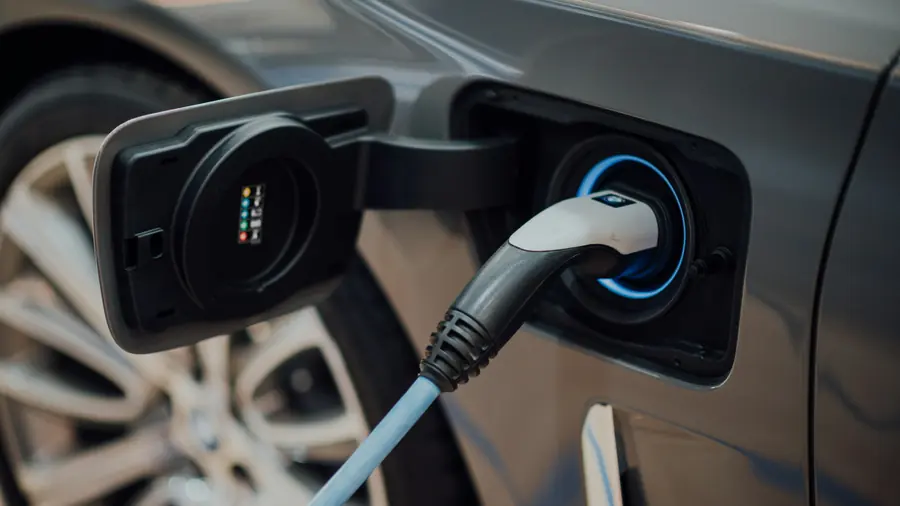
Thunderbolt designs, builds and capacity-tests lithium batteries for boats in our Dubai workshop: 12, 24, 36 and 48 V packs for trolling motors and electric outboards, deep-cycle house banks for yachts and fishing boats, and LiFePO₄ starter batteries that also run the boat's electrics. Every pack is sealed against spray and salt air, built to fit your hatch and your motor, and delivered across the UAE, Saudi Arabia, Qatar, Kuwait, Bahrain and Oman.
What our marine battery service includes
A boat asks more of a battery than a car does: it is discharged deeply every trip, it lives in a hot, wet, salty locker, and when it fails you are on the water. We do not resell a boxed battery with a marine sticker. We build a pack for your motor and your boat and hand it over ready to connect. You get:
- Engineering. Voltage and capacity sized from your motor's rating and the hours you fish or cruise, the cell choice, the BMS, the case and the connectors, and a costed proposal.
- The battery. New grade-A cells from EVE and other established makers, matched before assembly and held under compression in rigid holders, with a smart BMS and active balancing.
- A sealed case. A serviceable waterproof case with handles as standard; an IP67 enclosure on request; sealed connectors and corrosion-resistant fasteners.
- Instruments on the dash. A remote state-of-charge display or a battery computer (coulomb counter) that mounts on the console, and Bluetooth for the BMS app.
- A capacity test and its log. Every pack is fully charged, balanced and discharged at its working current before it leaves, so you know its real capacity.
- Delivery and warranty. Pickup in Dubai or delivery across the UAE and the GCC under our delivery policy; warranty up to 36 months on components and workmanship, stated in the order.
Who it is for
| Customer | What they need | Typical pack |
|---|---|---|
| Anglers with a trolling motor | A full day of positioning and Spot-Lock without the voltage sagging, at a fraction of lead-acid weight | 24 V or 36 V, 60–200 Ah |
| Electric outboard and tender owners | Range for the trip, fast recharge at the marina | 36–48 V, 50–105 Ah |
| Fishing boats with a petrol outboard | One battery that cranks the engine and runs the sounder, anchor, lights and music | 12 V 300 Ah starter + house |
| Yacht owners and skippers | A deep-cycle house bank for fridges, lights, navigation and an inverter at anchor | 12 or 24 V, 200–600 Ah |
| Boat builders, rental and charter operators | A repeatable pack for a model or a fleet, with paperwork | Any of the above, to a drawing |
| Divers, researchers and subsea developers | Compact packs for underwater scooters and instruments, with fast chargers | 36 V, 10–20 Ah |
Why switch your boat to a lithium battery
- Full power to the end of the charge. A LiFePO₄ pack holds its voltage almost flat while it discharges, so the trolling motor pushes as hard in the afternoon as in the morning.
- Less weight in the boat. A lithium pack weighs roughly a third to half of a lead-acid bank of the same usable energy, which matters on a bass boat or a tender.
- More usable capacity. You can use 80–90% of a LiFePO₄ battery every trip; lead-acid lasts far longer if you use only about half.
- One battery instead of three. Three 12 V lead-acid batteries in series for a 36 V motor become one 36 V pack, with one charger lead and one state-of-charge display.
- It survives the heat better. A locker on a UAE summer afternoon cooks lead-acid batteries; LiFePO₄ is the most thermally stable common lithium chemistry, and the BMS protects it at its limits.
How it works: from brief to a battery in your boat
- Brief. You send the motor model and voltage, the boat, the hatch or locker dimensions with a photo, and how many hours you run — by WhatsApp or the quote form.
- Engineering and proposal. The pack voltage and capacity, the cells and their datasheet, the case, the connectors and instruments, the warranty, the price and the date.
- Assembly. Cell matching, assembly in compression holders, BMS programming, sealing and fitting of the connectors in our Dubai workshop.
- Capacity test. Each pack is charged, balanced and discharged at its working current; you receive the measured capacity.
- Delivery or pickup. Builds start from two working days; larger house banks take longer and the date is in the quote.
- Support. Questions are answered from the BMS data over Bluetooth; we test and service packs in the workshop when needed.
Why Thunderbolt
- Built in Dubai, not shipped from a catalogue. The pack is made for your hatch, your motor and your connectors, and we can service it locally.
- Any voltage the motor wants. 12, 24, 36 or 48 V, or a dual-voltage motor's highest setting in one pack.
- Serviceable, not glued. Our cases open, so a weak cell or a BMS can be replaced instead of the whole battery.
- Proof before delivery. A measured capacity for every pack, not a label promise. We have shipped more than 1,200 packs.
Marine batteries we build
| Battery | Voltage | Capacity | Typical use |
|---|---|---|---|
| Trolling motor battery | 12, 24 or 36 V | 60–200 Ah | Bow-mount and transom trolling motors |
| Electric outboard / propulsion pack | 36–48 V | 50–105 Ah+ | Electric outboards, tenders, small electric boats |
| Starter + house (2-in-1) | 12 V | 300 Ah | Cranking a petrol outboard and running the electronics |
| House / service bank | 12 or 24 V | 200–600 Ah | Yachts at anchor: fridge, lights, navigation, inverter |
| Accessory battery | 12 V | 60–210 Ah | Electric anchor, sounder, livewell pump, lights |
| Subsea pack | 36 V | 10–20 Ah | Underwater scooters, ROVs and instruments |
These are the ranges we quote most often, not limits. A motor with an unusual voltage, a hatch with an odd shape or a pack that has to go under a seat is exactly what a custom build is for.
Lithium trolling motor battery: 24 V or 36 V?
Many modern trolling motors run on more than one voltage. The Minn Kota Ulterra QUEST, for example, is a 24/36 V dual-voltage brushless motor; when we built a pack for one, we built it for 36 V, the setting at which the motor reaches its maximum thrust. The rule of thumb is simple: use the highest voltage your motor accepts. At the same power, a higher voltage means less current, thinner cables, less heat in the wiring and less voltage drop between the battery and the motor.
Then size the capacity to the day. A trolling motor rarely runs at full power; on Spot-Lock in a current it pulses between low and high. We ask how you fish — open water or a creek, wind and tide, how many hours — and size the pack so that a long day ends with charge to spare.
LiFePO₄ vs lead-acid: the best marine battery chemistry
For almost every boat we recommend lithium iron phosphate (LiFePO₄). It is thermally the most stable common lithium chemistry, it lasts thousands of cycles and it does not mind being discharged deeply every trip. Where every kilogram counts — racing tenders, small electric craft — Li-ion NMC packs are lighter for the same energy; we built a 48 V Li-ion pack on EVE 50E cells for a craft with two 1,500 W motors. Typical figures for the options boat owners compare:
| Chemistry | Usable depth of discharge | Typical cycle life | Weight for the same energy | Where it fits |
|---|---|---|---|---|
| Flooded / AGM lead-acid | about 50% | hundreds to about 1,000 | heaviest | cheap starter batteries, rarely used boats |
| LiFePO₄ | 80–90% | 3,000–6,000+ | about a third to half of lead-acid | trolling motors, house banks, starter + house |
| Li-ion NMC | 80–90% | 1,000–2,000 | lightest | electric propulsion where weight decides |
Cycle life depends on temperature, depth of discharge and charge rate, so these are typical ranges from cell datasheets, not a promise for a specific pack. The cells, their datasheet and the warranty for your build are stated in the quote.
Marine batteries for UAE heat, humidity and salt
The Gulf is a hard place for a battery. A closed locker in July can sit far above the air temperature, the air at the marina is humid and salty, and spray finds every gap. So we design for the boat, not for a bench:
- A sealed, serviceable case. Our standard marine case is waterproof, with handles and gasketed lids bolted to threaded inserts so it can be opened for service.
- IP67 on request. Under IEC 60529, the first digit 6 means dust-tight and the second digit 7 means the enclosure survives 30 minutes of immersion at 1 m. That is the rating we build to for packs that may be splashed or briefly submerged in a bilge or on an open deck.
- Sealed connectors and corrosion-resistant hardware. Marine-grade terminals, tinned copper where it fits, stainless fasteners and boots on every exposed terminal.
- Temperature limits in the BMS. External sensors along the cells; the BMS reduces or stops charging when the pack is too hot and stops discharging before the cells are at risk.
- Placement advice. Out of direct sun, away from the engine, with some air movement — a shaded, ventilated locker adds more life than any electronics.
Inside a lithium marine battery
- Cells. New grade-A prismatic LiFePO₄ cells (or cylindrical Li-ion cells for light propulsion packs), checked for voltage and internal resistance and matched before assembly.
- Compression frame. The cells sit in rigid holders under compression, which limits swelling and holds the pack together on a boat that slams through chop.
- Smart BMS. Protection against over- and under-voltage, over-current, short circuit and temperature, with Bluetooth for the phone app; for starter batteries, a BMS rated for the cranking current.
- Active balancing. A 5 A active balancer keeps the cells equal; on request it is switched from a button on the dashboard.
- Connectors. Anderson 120 A, XT90 or threaded M8 studs, chosen for the motor's current and the boat's wiring.
- Instruments. A remote state-of-charge display or a coulomb counter for the console; USB-A/C sockets and a 12 V socket when the battery also serves as a power source on board.
Marine battery chargers, motors and onboard systems
A lithium battery needs a charger with a lithium profile — a charger set up for lead-acid will either undercharge it or keep it at a voltage that ages it. We supply a matched charger with the pack or check the onboard charger you have. On boats with an engine, the alternator can charge the house bank through a DC-DC charger, which protects the alternator from the high current a lithium bank accepts. For yachts with an inverter or a charge controller that talks to the battery, the BMS can communicate over CAN or RS485.
How to size a boat battery: a worked example
A 36 V system sized for up to 2,880 W is used for a six-hour day of fishing. It does not run flat out all day; suppose it averages a third of its maximum.
average ≈ 80 A ÷ 3 ≈ 27 A
27 A × 6 h ≈ 160 Ah needed
÷ 0.9 usable depth of discharge ≈ 180 Ah → a 36 V pack of about 180 Ah, or 105 Ah for a day of about three and a half hours
The same arithmetic works for a house bank: add up the watt-hours of the fridge, lights, navigation and anything on the inverter for the time at anchor, divide by the voltage and by 0.9. Then check the peak current — an electric anchor or a starter motor sets the BMS and the cables, not the average. We do this with your real equipment list before quoting.
Marine battery price in the UAE: what drives the cost
- Capacity in kWh. Most of the cost is the cells; a 36 V 105 Ah pack holds about 3.8 kWh, a 12 V 300 Ah pack about 3.6 kWh.
- Current. A starter battery or a powerful outboard needs a BMS, busbars and connectors rated for hundreds of amps.
- The case. A standard sealed case costs less than a custom IP67 enclosure shaped to a hatch.
- Extras. Remote displays, dashboard switches, USB and 12 V sockets, a matched charger.
- Lifetime cost. A LiFePO₄ pack that lasts thousands of cycles usually costs less per trip than lead-acid batteries replaced every couple of seasons.
Send us the brief and we return a costed proposal — request a quote.
Boat batteries across the UAE, Saudi Arabia, Qatar, Kuwait, Bahrain and Oman
We build in Dubai and deliver to all seven Emirates — from the marinas of Dubai and Abu Dhabi to Ras Al Khaimah and the east coast at Fujairah — and to Saudi Arabia's Red Sea and Gulf coasts, Qatar, Kuwait, Bahrain and Oman, under our delivery policy. Lithium batteries travel as Class 9 dangerous goods; the method, the date and who pays import duties are in the quote. For a boat that is being prepared for a season, tell us the launch date and we plan the build around it.
Safety and standards for lithium batteries on boats
On a boat a battery fault is more serious than on land, so we take the standards seriously. For transport, the cells we use have passed the tests of UN Manual of Tests and Criteria sub-section 38.3. The finished pack is shipped as Class 9 dangerous goods under the rules that apply to its size and production run. For the cells and the battery, IEC 62619 sets safety requirements for industrial lithium batteries and explicitly covers marine vehicles. For the installation, boat builders in many markets follow the American Boat & Yacht Council: ABYC says its E-13 standard applies to all lithium-ion chemistries, including LFP, and must be used together with E-10 for storage batteries. Practically: a fuse or breaker close to the battery, cables sized for the peak current, the battery secured against movement, and a BMS that can disconnect it. If your boat needs certificates for a class society, a charter licence or an insurer, tell us at the brief stage.
Related applications
The same cells and BMS run in our solar battery storage banks, our caravan and RV off-grid power systems and our 12 V LiFePO₄ batteries for security and industry. For an old pack that needs new cells, see battery pack repair and replacement; for a portable source of power on board, our portable power stations.
From our work
- 36 V pack for a Minn Kota Ulterra QUEST 24/36 trolling motor. Built for the motor's 36 V setting, where it gives its maximum thrust: grade-A EVE cells in a compression holder frame, ANT smart BMS with Bluetooth, a 5 A controllable active balancing module, Anderson 120 A and XT90 power connectors, rated for up to 2,880 W (80 A). A coulomb counter and a button that switches the balancer were mounted remotely on the boat's dashboard. 475 × 360 × 230 mm, about 70 kg.
- 36 V 105 Ah LiFePO₄ for a Haibo iPenguin electric boat motor. Grade-A cells, a smart BMS with additional protection and Bluetooth, active balancing, a sealed serviceable case with handles — about 3.8 kWh.
- 12 V 300 Ah starter + house battery for a 140 hp outboard. One LiFePO₄ battery that cranks the engine and runs the sounder, anchor, lights and music: 300 A continuous, 600 A for up to 5 seconds of cranking, 3.6 kWh, grade-A EVE cells, ANT smart BMS, a 5 A active balancer and a remote display. 305 × 365 × 215 mm, about 24 kg. We have built the same 12 V 300 Ah base as a yacht service battery and as a boat house battery with a standard BMS.
- 12 V LiFePO₄ for electric anchors and small motors. 210 Ah packs in sealed cases for a 12 V electric anchor; 105 Ah and 60 Ah boat batteries in waterproof cases with a battery computer, USB and a 12 V socket.
- 36 V packs for underwater scooters. Two LiFePO₄ 36 V 12 Ah packs with two fast chargers for the underwater scooters of a research expedition — our design, modelling, 3D-printed parts and assembly. Read the project.
- 48 V Li-ion propulsion pack. 48 V 50 Ah on EVE 50E cells in holders with an ANT BMS, for a craft with two 1,500 W motors.
What to send us for a quote
- The motor or engine: make, model and voltage — or the equipment list for a house bank.
- How long you run it on a typical day, and how you charge (shore power, alternator, solar).
- The hatch or locker dimensions, with a photo, and whether the battery will be wet or exposed.
- The connectors and instruments you want, and the country and city for delivery.
Send it by WhatsApp or through the quote form — we reply on WhatsApp during working hours with questions or a costed proposal.
Frequently asked questions
What is the best battery for a boat in the UAE?
For trolling motors, electric outboards and house banks, a LiFePO₄ lithium battery: you can use 80–90% of its capacity, it lasts thousands of cycles and it tolerates Gulf heat better than lead-acid and is the most thermally stable common lithium chemistry. Lead-acid still works as a cheap starter battery on a boat that is rarely used.
What battery do I need for a 36 V trolling motor?
One 36 V lithium pack instead of three 12 V lead-acid batteries in series. Size it from the motor's maximum current and the hours you fish: a motor drawing up to 80 A, averaging a third of that for six hours, needs about 180 Ah; 105 Ah covers a shorter day.
Is a lithium marine battery safe?
LiFePO₄ is the most thermally stable common lithium chemistry, and our packs have a BMS that disconnects the battery on over-current, over- or under-voltage and over-temperature. Installed with a fuse near the battery, correctly sized cables and a secure mounting, it is a safe choice; ABYC's E-13 standard covers lithium installations on boats.
Is your marine battery waterproof?
Our standard marine case is sealed against spray and rain. For batteries in a wet bilge or on an open deck we build IP67 enclosures, which under IEC 60529 are dust-tight and survive 30 minutes of immersion at 1 m.
Can a lithium battery start my outboard engine?
Yes, if it is designed for it. Our 12 V 300 Ah starter + house battery delivers 600 A for up to 5 seconds to crank a 140 hp outboard and also runs the sounder, anchor and lights. We size the BMS from the engine's cranking current.
Can I charge a lithium boat battery with my old charger?
Only if the charger has a lithium (LiFePO₄) profile. A lead-acid charger will undercharge the battery or hold it at the wrong voltage. We supply a matched charger or check yours, and recommend a DC-DC charger when the engine's alternator charges the house bank.
How much does a marine lithium battery cost in the UAE?
It depends mostly on the capacity in kWh, the current it must deliver, the case or IP67 enclosure and the extras such as remote displays and a charger. Over its life a LiFePO₄ battery usually costs less per trip than lead-acid. Send us your motor and boat details and Thunderbolt returns a costed proposal.
How long does it take to build a boat battery?
Most marine packs are built and tested from two working days; larger house banks take longer, and the date is stated in the quote.
Sources
- IEC 60529 — Degrees of protection provided by enclosures (IP Code) — the international standard that defines IP ratings
- IP code — summary of IEC 60529 test conditions (Wikipedia) — IP6x dust-tight; IPx7 immersion for 30 minutes at 1 m
- IEC 62619 — safety requirements for industrial lithium cells and batteries, including those for marine vehicles
- ABYC — Myth vs fact: lithium-ion batteries — E-13 applies to all lithium-ion chemistries including LFP and is used together with E-10
- IATA Lithium Battery Guidance Document (2026) — lithium cells and batteries must pass UN Manual of Tests and Criteria sub-section 38.3 before transport
- TackleDirect — Minn Kota Ulterra QUEST trolling motors — Ulterra QUEST motors are 24/36 V dual-voltage brushless motors