For years, 1,000 km on one charge was a slide in investor decks. In 2026 it reached test vehicles. I want to separate what is confirmed from what is being repeated online — and explain why I think the most important effect of these cells will not be in cars at all.
FAW: a 142 kWh semi-solid-state pack
In February 2026 China FAW Group announced that its battery company, China Automotive New Energy Battery (CANEB, formerly Lishen), had installed a semi-solid-state pack in a vehicle. The cell was developed with a team led by Academician Chen Jun at Nankai University.
- Pack: 142 kWh.
- Cell energy density: above 500 Wh/kg — roughly double a typical lithium-ion EV cell today.
- Chemistry: lithium-rich manganese cathode with a solid-liquid hybrid electrolyte (the Chinese industry now prefers “solid-liquid hybrid” to “semi-solid”).
- Range: over 1,000 km on the Chinese CLTC test cycle.
- Status: prototype validation, with demonstration operations planned for 2026. FAW is working towards a pack above 200 kWh. No production date or price has been published.
The detail I find most interesting is not the range but the cathode. Lithium-rich manganese avoids most of the nickel and cobalt that make today's high-energy cells expensive and politically sensitive. If it holds up in cycling, that matters more for the industry than any single range record — much as the zinc-iodine work at Flinders matters more for its chemistry than for its headline cycle count.
Gotion: all-solid-state cells in Volkswagen-backed test cars
Gotion High-Tech is not an ordinary supplier for Volkswagen: in 2020 the group paid about €1 billion for a 26% stake and became Gotion's largest shareholder. In March 2026 Gotion said it had started testing its all-solid-state cells in vehicles.
- Cell: 350 Wh/kg, 70 Ah.
- Range claim: up to 1,000 km CLTC.
- Manufacturing: a 0.2 GWh pilot line reached 90% yield in 2025, and the design of a 2 GWh all-solid-state line is essentially complete.
- Volkswagen Group: Gotion supplies LFP and other chemistries for Volkswagen Group EVs, including Audi models, and positions solid-state among them.
For me, the 90% pilot yield is the most telling number in Gotion's announcement. Solid-state cells have been demonstrated for years; what kept them out of cars was the inability to make them reliably. Yield is where a laboratory technology becomes an industrial one.
Has Volkswagen or Audi ordered these batteries?
Not publicly. As of November 2026 I have found no confirmed purchase order or production contract from Volkswagen or Audi for 1,000 km solid-state cells. What exists is a close shareholder and supply relationship with Gotion, and parallel solid-state development through Volkswagen's own battery company PowerCo, which signed a joint development agreement with Factorial in February 2026. Headlines claiming that “VW has ordered 1,000 km batteries” trace back to older, poorly sourced reports — in 2023 Volkswagen itself said its cooperation with Gotion then covered only its unified cell. I would rather wait for the companies to announce an order than repeat a rumour.
Read the range figures carefully
- CLTC is generous. The Chinese cycle gives noticeably higher numbers than the European WLTP or the US EPA test, and motorway driving in summer heat lowers it further.
- The pack is large. Much of FAW's range comes from 142 kWh of capacity. The real gain is energy density: the same range from a lighter pack, or more range from the same weight.
- Timelines. Industry coverage points to small-batch production around 2027–2028 and mass production closer to 2030.
Why I think the first winners will not be cars
Cars pay for the research, but most drivers do not need 1,000 km; they need a cheaper car with 400–500 km and fast charging. The applications that cannot do without 350–500 Wh/kg are the ones where every kilogram is flight time or payload: drones, eVTOL aircraft, robotics and marine craft. I expect the first non-automotive packs on these cells to appear there, in small volumes and at high prices, before they are cheap enough for mass-market cars.
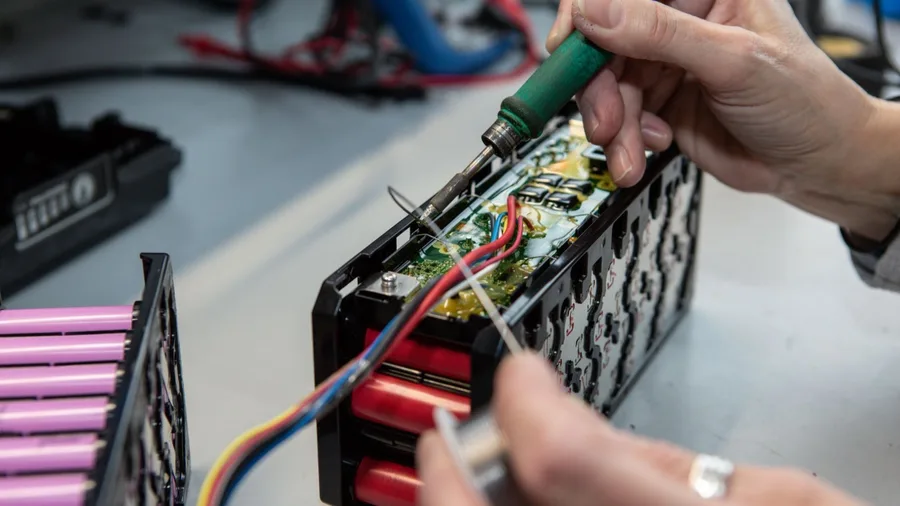
At Thunderbolt we assemble and service packs for drones and eVTOL, and we are certified to supply batteries to the aviation industry. Today those packs use high-energy Li-ion cells. When solid-state and semi-solid cells become available in small lots, they will change what a custom pack can do — and that is the moment I am preparing for.
Frequently asked questions
Is there a car with a 1,000 km battery on sale in 2026?
Not in volume. FAW and Gotion have 1,000 km-class packs in prototype and test vehicles, rated on the generous Chinese CLTC cycle. Industry timelines point to small batches around 2027–2028 and mass production closer to 2030.
What is the difference between semi-solid-state and all-solid-state batteries?
A semi-solid-state (solid-liquid hybrid) cell keeps some liquid electrolyte alongside solid components, while an all-solid-state cell replaces the liquid electrolyte entirely with a solid one. Semi-solid cells are easier to manufacture today; all-solid-state promises higher safety and energy density.
How far would a 1,000 km CLTC battery really go in the UAE?
At motorway speed in summer with air conditioning, an estimated 20–23 kWh per 100 km gives roughly 620–710 km from FAW's 142 kWh pack — excellent, but well short of the headline figure.
Does Thunderbolt build batteries for drones and eVTOL?
Yes. Thunderbolt assembles and services battery packs for drones and eVTOL in Dubai and is certified to supply batteries to the aviation industry.
Sources
- CnEVPost, 11 February 2026 — FAW/CANEB 142 kWh pack, >500 Wh/kg, Nankai University, prototype status, >200 kWh target
- Electrek, 10 February 2026 — FAW pack installed in a vehicle, >1,000 km CLTC, industry timelines
- InsideEVs, February 2026 — lithium-manganese semi-solid chemistry, CLTC caveat, cost and launch unclear
- Electrek, 2 March 2026 — Gotion in-vehicle tests, 350 Wh/kg, 70 Ah, VW 26% stake, pilot and 2 GWh lines
- Battery-Tech Network — Gotion all-solid-state pilot milestone
- Factorial Energy, SEC filing (Form 424B3), 2026 — joint development agreement with PowerCo, Volkswagen Group's battery company, February 2026
- TechNode, 19 May 2023 (corrected) — Volkswagen said its Gotion cooperation then covered only the unified cell