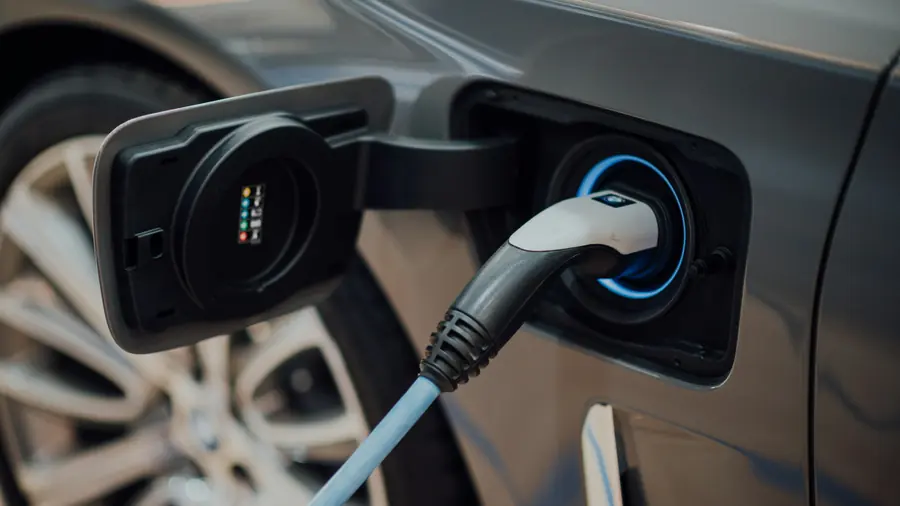
Thunderbolt assembles, services and tests battery packs for eVTOL aircraft and aviation applications in our Dubai workshop: new packs built to a programme's specification, diagnostics and cell replacement for packs in service, and capacity tests with full logs. Thunderbolt is certified to supply batteries to the aviation industry, and we work across the UAE, Saudi Arabia, Qatar, Kuwait, Bahrain and Oman.
What our eVTOL and aviation battery service includes
An aircraft battery is judged on three things at once: energy per kilogram, power when it is needed most — take-off, hover and landing — and what happens if a cell fails. Our work covers the parts of that job a battery workshop can do well and prove on a test bench:
- Assembly to specification. Packs and modules built to your drawings, cell selection and BMS, or engineered with you from the mission profile: prototypes, test packs, ground-test and iron-bird packs, UAV packs and packs for light electric aircraft.
- Diagnostics. Cell-by-cell voltage and internal-resistance checks, BMS log review, insulation and connection checks, to find why a pack lost capacity or tripped.
- Cell replacement and repacking. Replacing weak cells or modules with matched new ones, or rebuilding a pack with new cells, where the design and your documentation allow it.
- Capacity and load testing. Full charge, balance and discharge at the working current on our benches, with a temperature record and a test log for every pack.
- Documentation. Cell batch data, configuration, test results and serial numbers, so every pack can be traced.
- Transport. Shipping as Class 9 dangerous goods across the UAE and the GCC under our delivery policy.
Who it is for
| Customer | What they need | Typical work |
|---|---|---|
| eVTOL and electric aircraft developers | Prototype and test packs built fast to their specification, with logs | Modules and packs, high-energy Li-ion, test reports |
| UAV and drone operators | Flight packs, spares and repacks that match the aircraft | Li-ion 6S–14S, high-drain cells |
| Light-sport, paramotor and paratrike owners | An electric propulsion pack for a small manned aircraft | 60–100 V, 20–60 Ah, Li-ion |
| Operators, MROs and ground-support teams | Diagnostics, capacity tests and cell replacement for packs in service | Testing, servicing, ground-support packs |
| Universities and research labs | One-off packs and test rigs for electric flight research | Any chemistry, 3.6–96 V |
Why a local aviation battery partner
- Time. A test campaign stalls when a pack has to go back to a factory abroad for a capacity check or a new module. A workshop in Dubai can turn it around in days.
- Heat. Packs that fly in the Gulf need to be tested and stored with Gulf temperatures in mind.
- Evidence. Every decision about a flight pack — keep, repair or retire — should rest on measured capacity and resistance, not on a cycle counter.
- Traceability. Cells, modules and tests recorded so a pack's history is known.
How it works: from brief to a tested pack
- Brief. You send the specification or the pack to be serviced, the aircraft or programme, and the documentation that applies — by WhatsApp or the quote form.
- Engineering and proposal. The scope, the cells and their datasheet, the test plan, the price and the date.
- Assembly or service. Cell matching, assembly, cell replacement or diagnostics, in our Dubai workshop.
- Capacity test. Each pack is charged, balanced and discharged at its working current; you receive the measured capacity and the log.
- Delivery or pickup. Simple builds start from two working days; aviation work usually takes longer, and the date is in the quote.
- Support. Repeat tests, data review and cell replacement through the pack's life.
Why Thunderbolt
- Certified to supply batteries to the aviation industry.
- A real workshop in Dubai. Spot and laser welding, load-test benches, a component warehouse, in Dubai Production City.
- Flight packs already built. Including a propulsion pack for a single-seat manned paratrike and high-drain packs for cargo drones (see below).
- Every pack tested. Over 1,200 packs shipped, each one load-tested before it left the bench.
Air taxi Dubai: where the flying taxi programme stands
Dubai is preparing one of the world's first commercial air taxi services. The facts, from official and published sources:
- The agreement. In February 2024 Joby Aviation signed an agreement with Dubai's Roads and Transport Authority (RTA) giving it the exclusive right to operate air taxis in Dubai for six years, with four initial vertiports planned at Dubai International Airport, Palm Jumeirah, Dubai Marina and Downtown Dubai (Joby Aviation).
- The aircraft. Joby's aircraft is electric, with six rotors and four battery packs, carries a pilot and four passengers, and has a stated range of up to 160 km and a top speed of 320 km/h. In November 2025 the RTA and Joby completed the first crewed eVTOL flight between two sites in the UAE — from Margham to Al Maktoum International Airport, 17 minutes (Dubai Media Office).
- The vertiports. In July 2026 the UAE's General Civil Aviation Authority (GCAA) certified VDX, the vertiport beside Dubai International Airport built by Skyports, as the world's first purpose-built commercial vertiport: four storeys, about 3,100 m², two pads and rapid charging for electric aircraft (Khaleej Times). On 18 November 2026 the Dubai Marina vertiport became the second certified site in the network, designed for up to 21,000 landings and 84,000 passengers a year (Gulf Today).
- The launch. The RTA has been working towards a commercial launch by the end of 2026 (AeroTime); as of November 2026, the start of commercial flights remains subject to operational approvals.
Thunderbolt is not a supplier to Joby or to any other named eVTOL programme. We describe the programme because it is why the region now needs local battery skills: aircraft, test packs, ground equipment and the drones around them all run on lithium packs that need building, testing and servicing.
What makes an eVTOL aircraft battery different
- Specific energy. Every kilogram of battery is a kilogram of payload or range lost, so eVTOL packs use high-energy lithium-ion cells and light structures.
- Power at the end of the flight. Hover and landing need high power when the pack is at its lowest charge and often warmest. The pack is sized for that moment, not for cruise.
- Containing a failure. EASA's means of compliance for its Special Condition VTOL addresses propulsion battery thermal runaway, noting that lithium batteries used for propulsion bring higher capacity, specific energy and voltage with little service experience (EASA MOC-3 SC-VTOL). Cell spacing, barriers, venting and detection are designed in, not added later.
- Redundancy. Several independent packs — Joby's aircraft has four — so one failure does not end the flight.
- Certification. A propulsion battery on a certified aircraft is approved as part of that aircraft's design. Our role is to build, service and test to the programme's specification and documentation, not to replace that approval.
Aircraft battery chemistry: what we build with
| Chemistry | Strength | Where it fits in aviation |
|---|---|---|
| Li-ion NMC/NCA, cylindrical 18650/21700 | Among the highest energy per kilogram in volume production, robust cans, good cooling between cells | eVTOL and UAV propulsion, light electric aircraft |
| Li-ion pouch | High energy, flat modules | Programmes designed around pouch modules |
| LiFePO₄ | Most thermally stable, thousands of cycles | Ground-support equipment, hangar and vertiport backup |
| LTO | Very fast charging, very long life | Ground equipment that charges many times a day |
Cell chemistry is moving fast: semi-solid-state cells promise higher energy per kilogram, which matters even more in the air than on the road — see our article on semi-solid-state EV batteries.
Aviation batteries in Gulf heat
Lithium-ion performs well when warm but ages faster when kept hot; Battery University gives 0–45 °C as the charging range for Li-ion (BU-410). For aircraft packs in the Gulf this means charging in shade or a cooled room, letting packs cool after a flight before charging, storing them part-charged rather than full, and setting BMS temperature limits with the summer in mind. When we test a pack we log its temperature, not only its capacity.
Inside an aviation battery pack
- Cells. New cells from established manufacturers — from a single production batch where the programme requires it — each checked for voltage and internal resistance and matched before assembly.
- Structure. Holders that keep cells apart and in place under vibration; no glue where the pack must be serviceable.
- Connections. Spot or laser welds sized for the current, inspected and recorded.
- BMS. Cell-level voltage and temperature monitoring, several temperature sensors through the pack, current limits and data output over CAN or another interface the aircraft uses.
- Wiring. High-current cable sized for the take-off current, with secure routing and strain relief.
- Records. Cell batch, serial numbers, the test log and the configuration for each pack.
Diagnostics, cell replacement and capacity testing
Most aviation battery questions are answered by measurement. When a pack comes in, we read its BMS history, measure every cell's voltage and internal resistance, check connections for heat, and run a full capacity test at the working current. Then you get a clear answer: the pack is healthy; a cell group is weak and can be replaced with matched new cells; or the pack has reached the end of its useful life. Where the aircraft manufacturer's documentation sets the procedure, we follow it.
How to size an aircraft battery: a worked example
Our propulsion pack for a single-seat paratrike, from our work below:
continuous power: 85 V × 150 A ≈ 12.75 kW
time at full continuous power: 30 Ah ÷ 150 A = 0.2 h = 12 min
specific energy of the pack: 2,550 Wh ÷ 12 kg ≈ 210 Wh/kg
A real mission is not flown at full power: climb is short and cruise needs less. So the sizing starts from the power profile — climb, cruise, reserve — and the pack must still deliver climb power with the reserve left in it. The same arithmetic scales to an eVTOL, where the hover-and-land power at the end of the flight sets the minimum pack.
Aircraft battery price: what drives the cost
- Cells. High-energy cells with full batch traceability and a single production batch cost more than general cells.
- Engineering and testing. Thermal design, test plans and documentation are a large part of the work.
- Structure. Light structures with fire barriers and venting cost more to make than a simple enclosure.
- Quantity. The first pack carries the engineering; repeat packs to the same drawing cost less.
- Service versus new. Replacing a weak cell group usually costs much less than a new pack.
Send us the brief and we return a costed proposal — request a quote.
Aviation batteries across the UAE and the GCC
We work from Dubai Production City and deliver across all seven Emirates and to Saudi Arabia, Qatar, Kuwait, Bahrain and Oman. In the UAE, aircraft, vertiports and drones are regulated by the GCAA, with Dubai's Civil Aviation Authority and air navigation services also part of the air taxi programme (Dubai Media Office). Lithium batteries travel as Class 9 dangerous goods; by air, IATA rules apply (IATA lithium batteries).
Aviation battery standards: DO-311A and more
The FAA's advisory circular AC 20-184A, issued in September 2026 in place of AC 20-184, gives an acceptable means of compliance for testing and installing rechargeable lithium batteries and battery systems on aircraft, and refers to RTCA DO-311A, Minimum Operational Performance Standards for Rechargeable Lithium Batteries and Battery Systems (FAA AC 20-184A). For VTOL aircraft, EASA publishes means of compliance with its Special Condition VTOL, including propulsion battery thermal runaway (EASA). The cells we use have passed the UN 38.3 transport tests. The finished pack is shipped as Class 9 dangerous goods under the rules that apply to its size and production run. Which standards a pack must meet depends on the aircraft and its certification basis; tell us at the brief stage, and we agree what we build and test to.
Related applications
The same workshop builds drone and robot battery packs and offers battery repair and replacement; for ground power at a site, see UPS and backup power and solar battery storage, and our 20 kW UPS project.
From our work
- Propulsion battery for a single-seat paratrike — our first pack for a manned aircraft: 85 V 30 Ah, cells in holders, a smart BMS with six temperature sensors, short silicone-insulated AWG4 power cables, designed for up to 150 A continuous and 200 A at start-up, about 12 kg.
- 48 V 28 Ah power pack for a cargo drone: high-current EVE Li-ion cells in plastic holders, because the pack can reach 60 °C in operation; up to 90 A continuous, limited in the BMS software.
What to send us for a quote
- The aircraft or programme, and whether this is a new build, a service or a test.
- The specification: voltage, capacity, continuous and peak current, weight and envelope — or the pack itself with its documentation.
- The standards or documents the work must follow.
- Quantity, the timeline, and where the packs will be used and stored.
Send it by WhatsApp or through the quote form — we reply on WhatsApp during working hours with questions or a costed proposal.
Frequently asked questions
When will the Dubai flying taxi start?
The RTA has been working towards a commercial launch by the end of 2026. The vertiports at Dubai International Airport and Dubai Marina were certified by the GCAA in July and November 2026; as of November 2026, the start of commercial flights is subject to operational approvals.
Who operates the air taxi in Dubai?
Joby Aviation, under a 2024 agreement with Dubai's Roads and Transport Authority that gives it the exclusive right to operate air taxis in Dubai for six years. Vertiports are built and operated by Skyports.
What battery does an eVTOL use?
High-energy lithium-ion packs, usually several independent ones; Joby's aircraft has four battery packs. They are sized for hover and landing power at the end of the flight and designed to contain a cell failure.
Do you supply batteries to Joby or other eVTOL companies?
No. We do not supply any named eVTOL programme. We build, service and test packs for aviation customers to their specification, and Thunderbolt is certified to supply batteries to the aviation industry.
What is RTCA DO-311A?
The Minimum Operational Performance Standards for rechargeable lithium battery systems on aircraft, published by RTCA. The FAA's AC 20-184A explains how DO-311A is used to show compliance for lithium batteries installed on aircraft.
Can you test the capacity of an aircraft or drone battery?
Yes. We read the BMS history, measure each cell's voltage and internal resistance and run a full capacity test at the working current, with a temperature record and a test log.
Can you replace cells in an aviation battery?
Where the pack's design and its documentation allow it, yes — with matched new cells, followed by a full capacity test. Where the manufacturer's procedure applies, we follow it.
How much does an aircraft battery cost?
It depends on the cells, the engineering and testing, the structure and fire protection, and the quantity. Service and cell replacement usually cost much less than a new pack. Send us the brief and Thunderbolt returns a costed proposal.
Sources
- Joby Aviation — Joby to launch air taxi service in UAE (February 2024) — agreement with Dubai RTA, six-year exclusive right, four initial vertiport sites
- Dubai Media Office, 16 November 2025 — first crewed eVTOL flight between two UAE sites; aircraft with six rotors and four battery packs, 160 km range, 320 km/h; GCAA, DCAA and DANS as partners
- Khaleej Times, 7 July 2026 — GCAA certifies VDX beside DXB as the world's first purpose-built commercial vertiport
- Gulf Today, 18 November 2026 — Dubai Marina vertiport certified as the second site; capacity; launch subject to operational approvals
- AeroTime, 17 April 2026 — RTA working towards commercial launch by the end of 2026
- FAA Advisory Circular AC 20-184A (18 September 2026) — testing and installation of rechargeable lithium batteries and battery systems on aircraft; refers to RTCA DO-311A; cancels AC 20-184
- EASA — Third Publication of Means of Compliance with the Special Condition VTOL (MOC-3 SC-VTOL) — propulsion battery thermal runaway in VTOL aircraft
- IATA — Lithium batteries — rules and guidance for transporting lithium batteries by air
- Battery University — BU-410: Charging at High and Low Temperatures — Li-ion charge range 0–45 °C; heat shortens life
Image credits: Cover: Dubai Media Office.